
Establishing the Condition of a Care Home Roof to Support Planned Maintenance
Worksop, South Yorkshire
Property Type: Care Home
Inspection Type: Independent Roof Condition Survey
Roof Covering: Slate, Lead, Flat
Report Length: 60 Pages / 45 Annotated Images
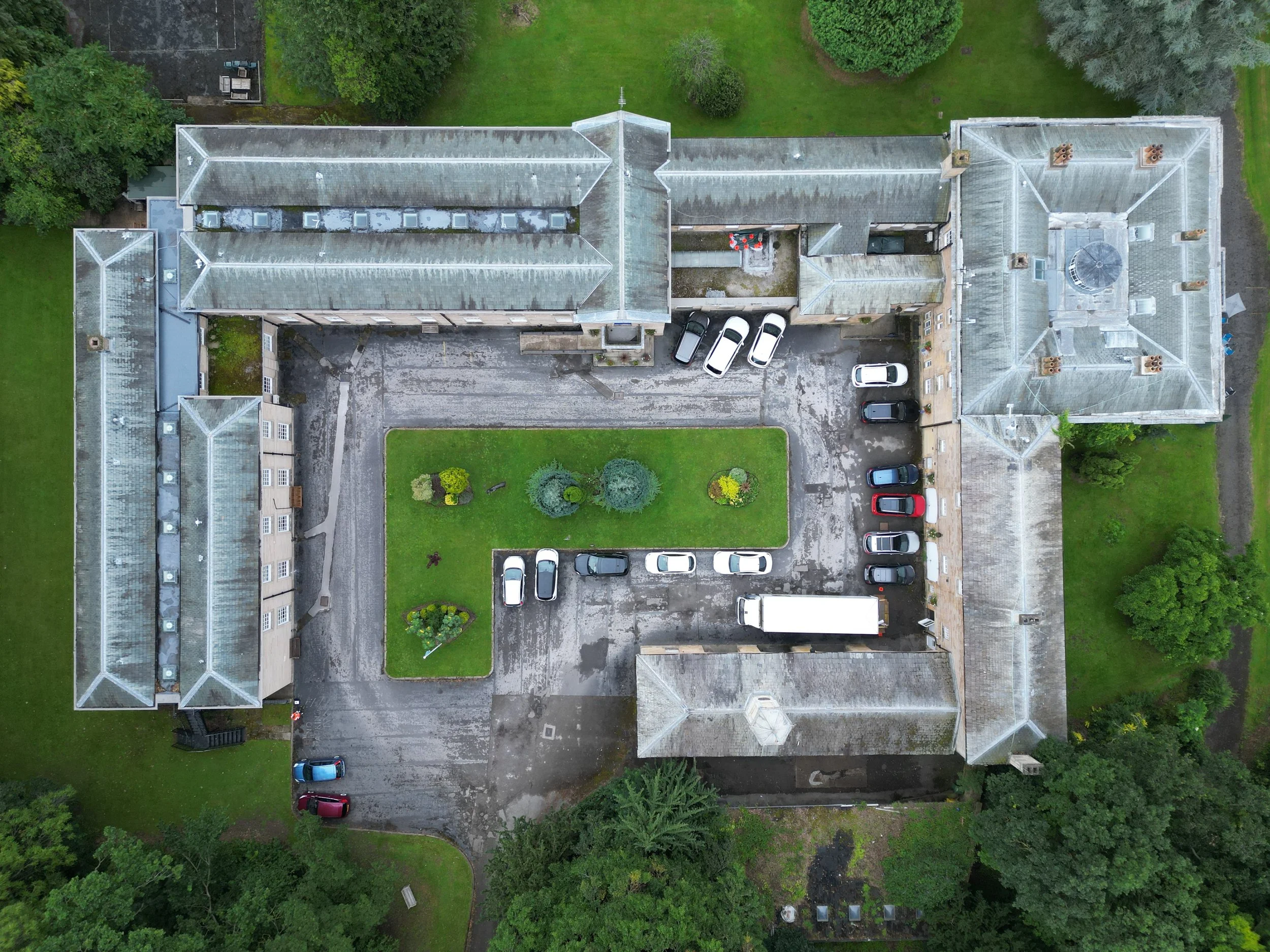
The Challenge
The client was responsible for a large operational care home comprising a mixture of traditional pitched roofs and flat roofing systems. Over time, maintenance had become largely reactive, with repairs undertaken as issues arose and to varying standards. Whilst individual defects had been addressed, there was no overall understanding of the condition of the roofing assets or a structured plan for future maintenance.
Inspection Objective
To undertake a comprehensive roof condition assessment of all accessible roofing areas, providing an independent evaluation of the roof's condition, identifying defects, assigning repair priorities and producing a fully illustrated report to support future maintenance planning.
Defective Chimneys, Lead Flashings & Masonry
The care home comprised numerous chimney stacks of varying size, age and construction located across multiple roof elevations. Our inspection identified a range of maintenance issues affecting these structures, including deteriorated mortar pointing, defective & entirely missing flaunching & pots, weathered brick and stonework and localised defects to lead flashings.
Chimneys remain one of the most common sources of roof leaks due to the number of junctions where masonry meets the roof covering. Defects to lead flashings, back gutters, soakers or mortar joints can allow water to penetrate beneath the roof covering, often resulting in concealed moisture ingress long before internal signs become apparent.
Whilst some of the chimney stacks remained structurally serviceable, several required varying degrees of maintenance to preserve their weatherproof integrity and prevent progressive deterioration. Recommendations ranged from localised repointing and flaunching repairs through to partial rebuilding and new leadwork.
As part of the inspection, each chimney was individually assessed and prioritised according to its condition, allowing the client to programme remedial works over time rather than reacting to individual failures as they occurred. This approach provides a more cost-effective long-term maintenance strategy while helping to reduce the likelihood of unplanned water ingress and emergency repairs.

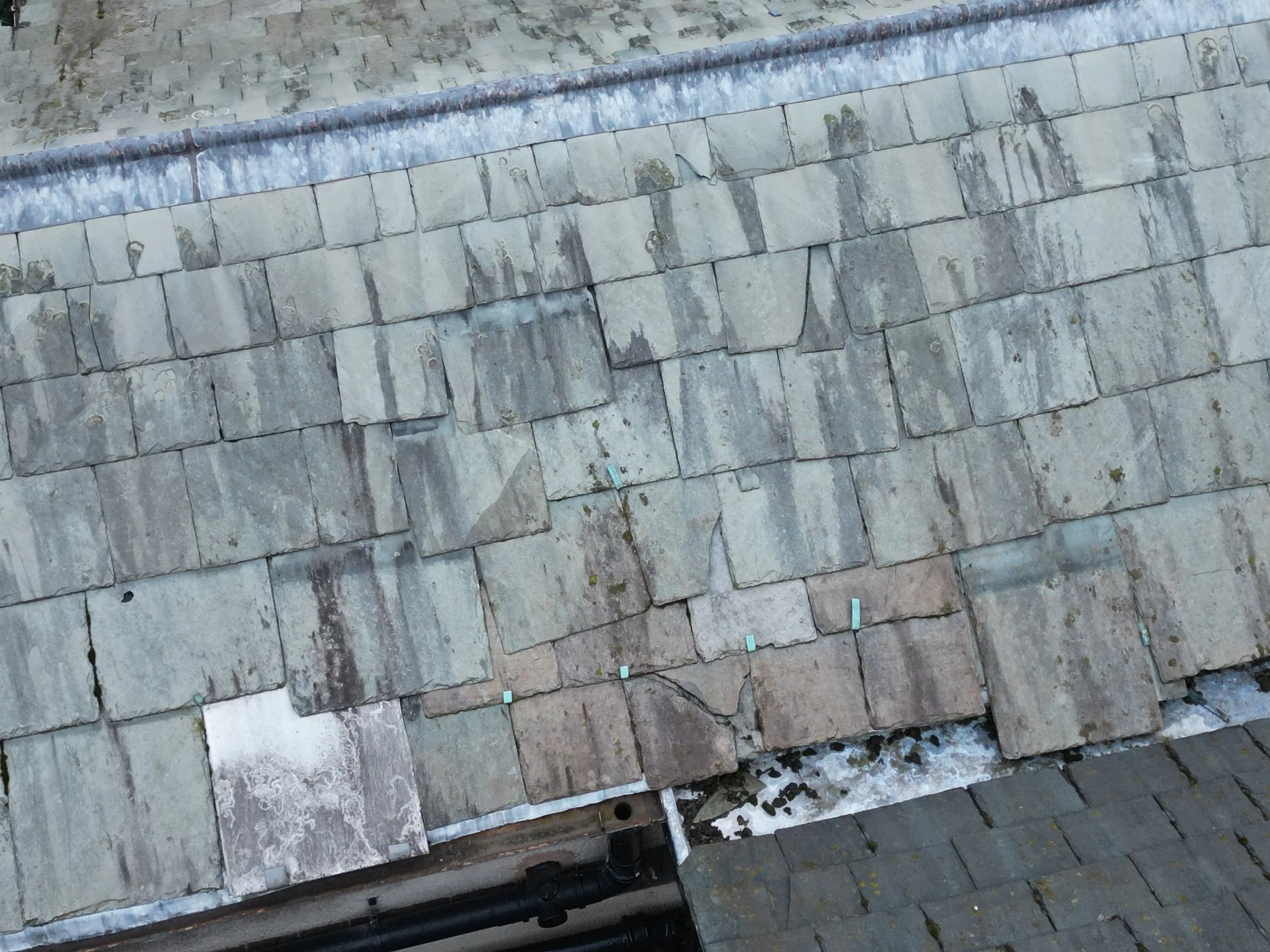
Defective Slate Roof Coverings
The care home incorporated extensive areas of traditional Westmorland slate and Welsh blue slate, both recognised for their longevity but requiring periodic maintenance to maximise their service life. Our inspection identified a range of isolated defects across these roof coverings, including slipped slates, split slates, previous repair works and localised deterioration associated with ageing fixings and historic maintenance.
Whilst many of the defects were relatively minor in isolation, damaged or displaced slates can allow wind-driven rain to penetrate beneath the roof covering, increasing the risk of water ingress, timber decay and progressive deterioration of the underlying roof structure if left unaddressed. In addition, several previous repairs of varying quality were identified, highlighting the reactive nature of historical maintenance across the site.
The inspection also considered the overall condition of the slate roof coverings, ridge details, hips, valleys and associated leadwork, allowing recommendations to be prioritised according to urgency and likely future performance. In many areas, relatively straightforward maintenance carried out at the appropriate time has the potential to significantly extend the serviceable life of these traditional roofing systems whilst preserving the character of the property.
By identifying defects early and adopting a planned maintenance approach, the client can address isolated failures before they develop into more extensive repairs, helping to protect both the building fabric and the long-term value of the roofing assets.
Deteriorated Flat Roofs
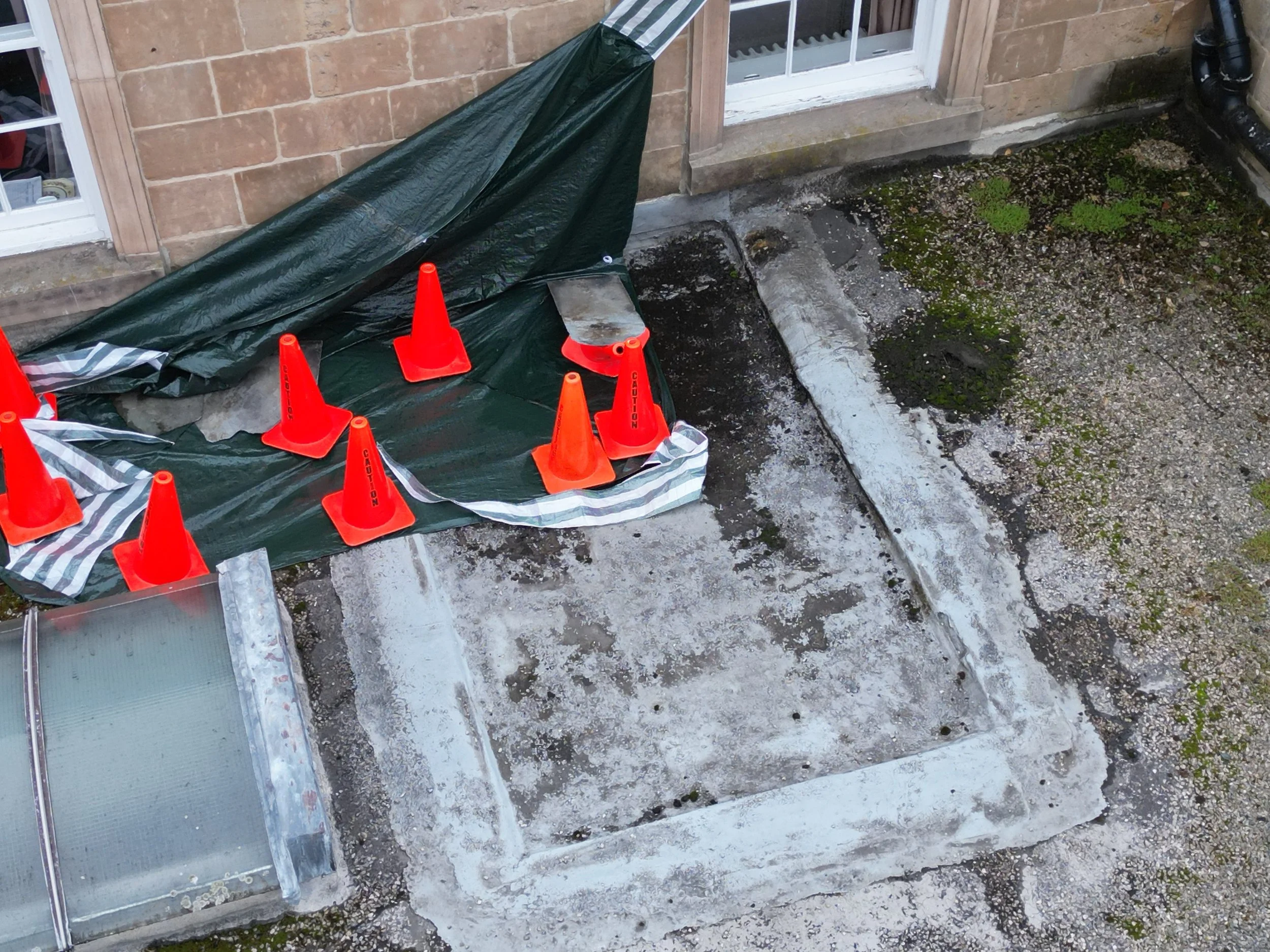
The care home incorporated a number of flat roofing systems of varying age, construction and specification, including both original roof coverings and areas that had been subject to previous repair works. Our inspection identified several maintenance issues, including ageing waterproofing membranes, localised surface deterioration, historic patch repairs and areas where the weatherproofing system was beginning to reach the end of its anticipated service life.
Unlike pitched roofs, defects within flat roofing systems often develop gradually and may remain undetected until water ingress becomes apparent internally. Prolonged exposure to ultraviolet light, standing water, thermal movement and natural weathering can all contribute to deterioration of the waterproofing layer, increasing the likelihood of future leaks if maintenance is deferred.
Several areas displayed evidence of previous reactive repairs, indicating that maintenance had historically focused on addressing isolated failures rather than the overall condition of the roofing system. Whilst many of these repairs remained serviceable, they highlighted the importance of implementing a planned maintenance programme to monitor deterioration and prioritise future investment before more extensive remedial works become necessary.
Recommendations were provided for each flat roof area based on its individual condition, enabling the client to phase maintenance works over time, maximise the remaining service life of existing roof coverings and reduce the likelihood of disruptive water ingress affecting the occupied care home.
Defective Rainwater Goods & Drainage Systems
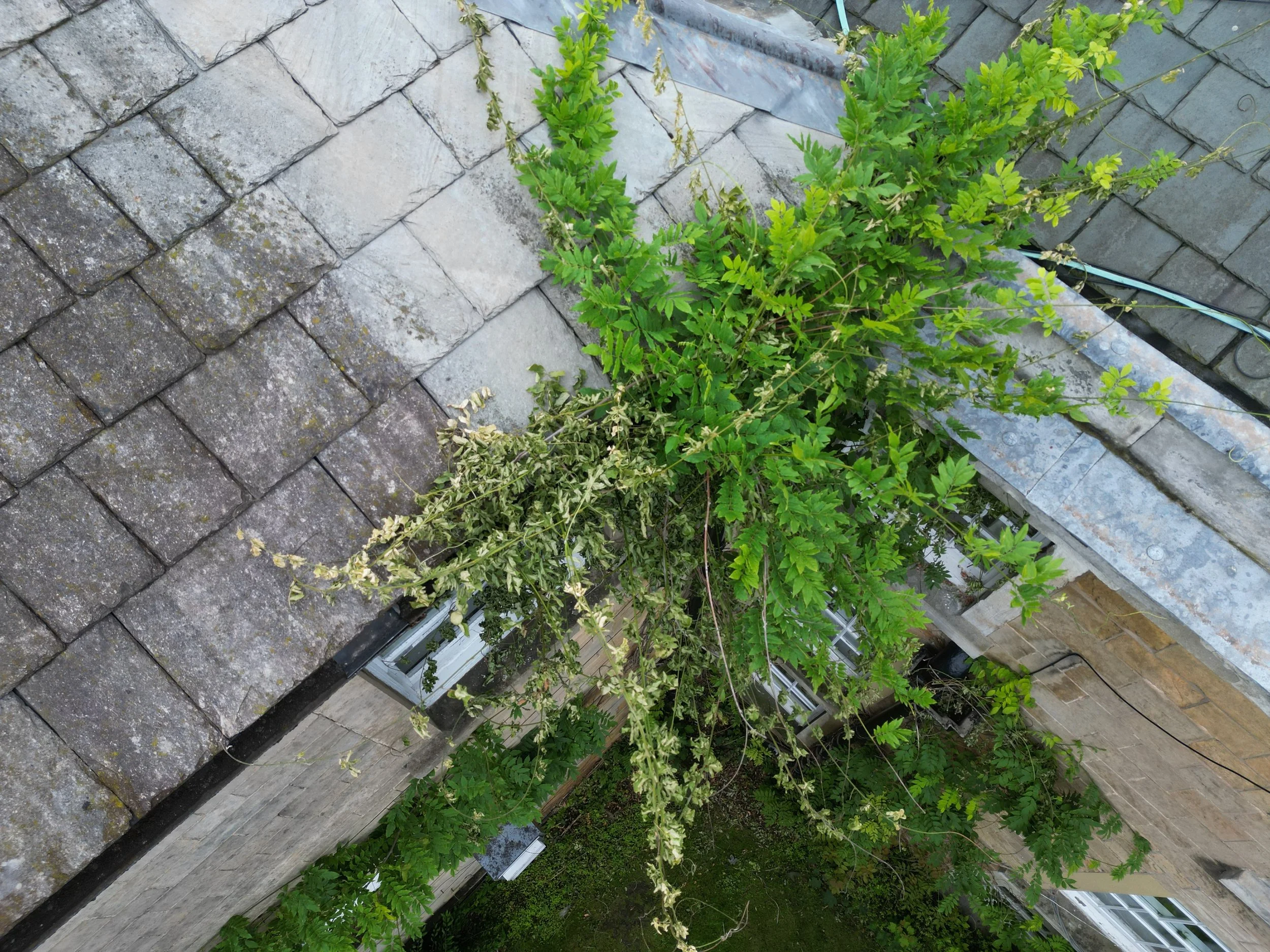
The inspection identified a number of maintenance issues affecting the property's rainwater goods, including blocked gutters, debris accumulation, localised deterioration and isolated defects to outlets and drainage components. On a property of this scale, effective rainwater management is essential to ensuring roof coverings perform as intended and to preventing unnecessary water ingress into the building fabric.
Blocked or poorly maintained gutters can prevent rainwater from draining efficiently, resulting in standing water, overflowing gutters and water tracking into vulnerable roof junctions, masonry and internal structures. Over time, this can contribute to dampness, deterioration of external building elements and avoidable internal damage, particularly during periods of prolonged or heavy rainfall.
Several gutter sections had become obstructed by moss, vegetation and general debris, restricting water flow and increasing the likelihood of overflow. Whilst these issues are generally straightforward to rectify, they demonstrate the importance of routine inspection and planned maintenance, particularly on complex roof layouts incorporating multiple valleys, parapet gutters and concealed drainage systems.
A programme of routine gutter cleaning, drainage maintenance and periodic roof inspections was recommended to maintain the effectiveness of the rainwater management system, reduce the risk of water ingress and protect the long-term condition of the roofing assets.
Our Recommendations
The inspection concluded that whilst significant deterioration was evident across many of the roofing assets, wholesale replacement of every roof area would represent a substantial capital investment and was neither practical nor financially viable as an immediate solution.
Instead, a phased, condition led maintenance strategy was recommended, enabling the client to target available budgets towards the highest priority defects whilst continuing to manage the remaining roof areas through planned inspection and maintenance.
Recommendations were prioritised according to the risk posed to the building, likelihood of water ingress and the overall condition of each roofing element. This included repairs to defective leadwork, chimney stacks, slate roof coverings, flat roofing systems and rainwater goods, together with ongoing monitoring of areas where deterioration was evident but immediate intervention was not yet essential.
Each recommendation was supported by photographic evidence, a clear explanation of the defect and indicative budget costs, allowing the client to develop a realistic long-term maintenance programme based on condition, risk and available funding rather than reacting to failures as they occurred.
By adopting this structured approach, the client can progressively improve the overall condition of the roofing assets over a number of years, extending their serviceable life where practical and ensuring future investment is directed where it will deliver the greatest benefit.
The Outcome
The inspection provided the client with, for the first time, a comprehensive understanding of the overall condition of the care home's roofing assets.
Rather than continuing to rely on reactive repairs, the client now has a fully illustrated condition report identifying the defects affecting each roof area, their relative priority and the likely investment required to address them. This has established a clear roadmap for future maintenance, allowing available budgets to be directed towards the areas of greatest need whilst planning longer term improvements across the wider estate.
By understanding the condition of each roofing element, the client is now able to make informed, evidence-based maintenance decisions, reducing the likelihood of unexpected failures whilst extending the serviceable life of the existing roofs wherever practical.
The inspection has transformed the client's approach from reacting to individual defects as they arise to implementing a structured, condition led maintenance strategy that will improve the overall standard of the roofing assets over time.
Still relying on reactive roof repairs?
Gain a clear understanding of your roofing assets with an independent condition report and start planning maintenance with confidence.
Independent Roof Inspection For Planned Maintenance Budegeting
Deeside, North Wales
Property Type: Large commercial premises
Inspection Type: Independent Roof Condition Survey
Roof Covering: Profile Metal Sheet
Report Length: 40 Pages / 35 Annotated Images
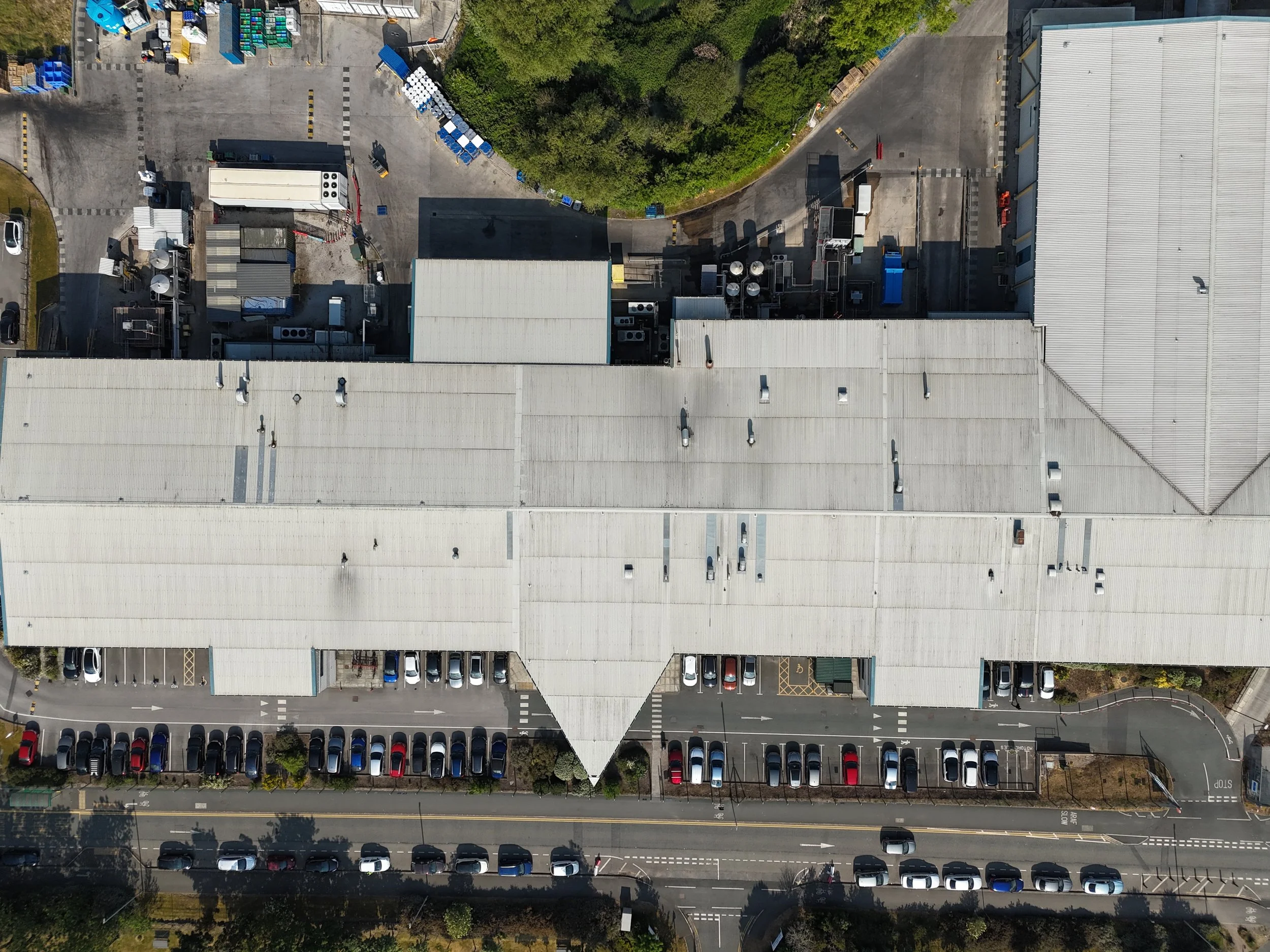
The Challenge
Verton Aerial Ltd was instructed to undertake a comprehensive roof condition inspection of a large commercial manufacturing facility in North Wales as part of the client's planned preventative maintenance strategy.
With valuable production equipment and controlled manufacturing areas beneath the roof, the client wanted to identify developing defects before they resulted in water ingress, operational disruption or costly emergency repairs.
The property comprised extensive profiled metal roof coverings incorporating numerous roof penetrations, including flues, ventilation systems and service pipework.
Inspection Objective
Our objective was to provide the client with an independent assessment of the roof's overall condition, identifying both current defects and areas requiring future attention.
The inspection was designed to allow maintenance to be planned proactively, prioritising remedial works based on condition and providing budget estimates to support future maintenance planning.
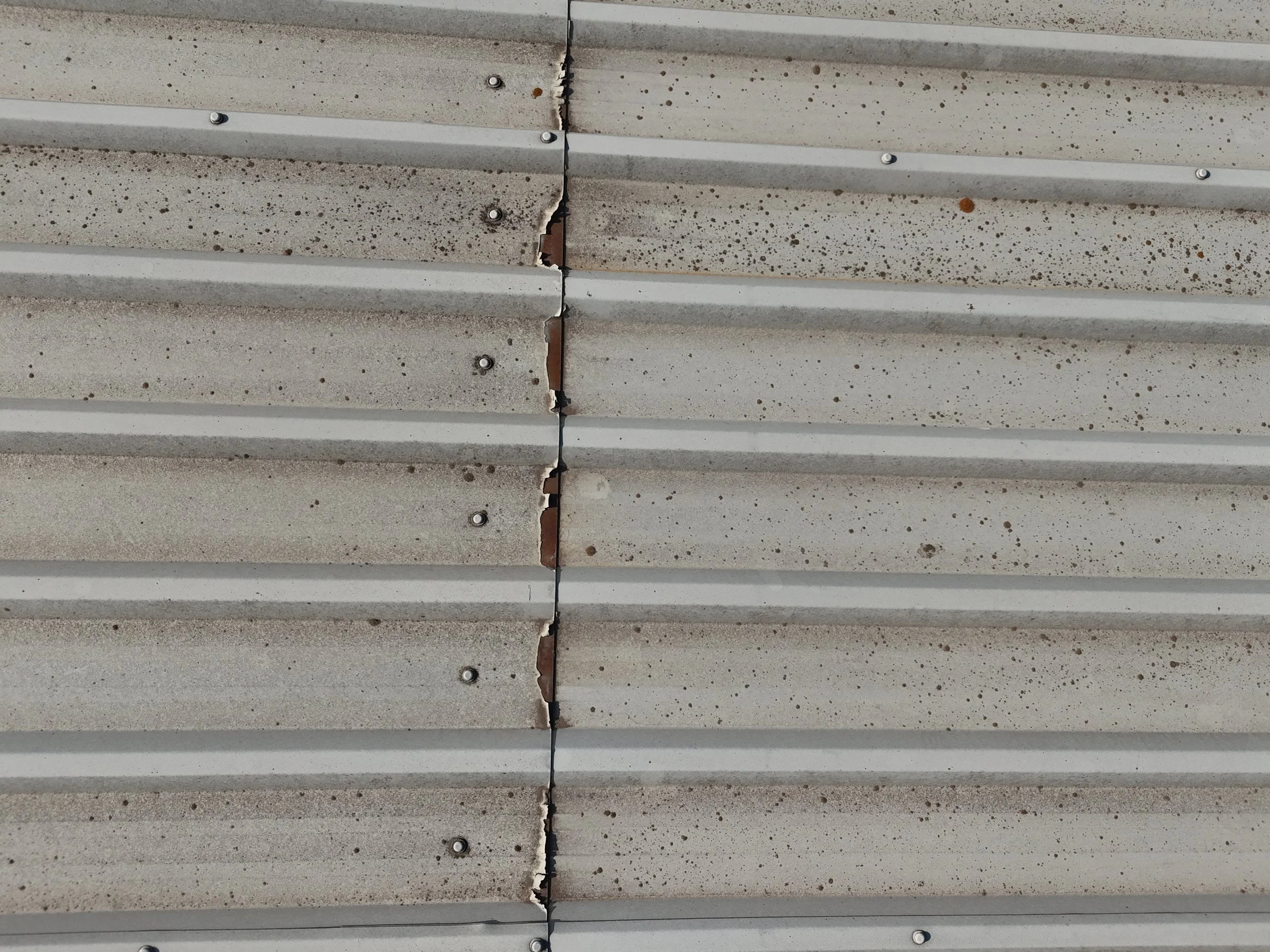
Cut Edge Corrosion
Moderate cut edge corrosion was identified across large sections of the profiled metal roof covering.
This commonly develops where the factory-applied protective coating has been compromised along the cut edge of the steel sheet, allowing corrosion to progressively work beneath the coating. Left untreated, this process can eventually affect sheet laps and fixings, leading to widespread deterioration and water ingress.
Fortunately, the corrosion remained within a repairable stage, allowing treatment using a specialist cut edge corrosion system. Addressing the issue now has the potential to significantly extend the lifespan of the existing roof while avoiding the substantial cost of premature sheet replacement.
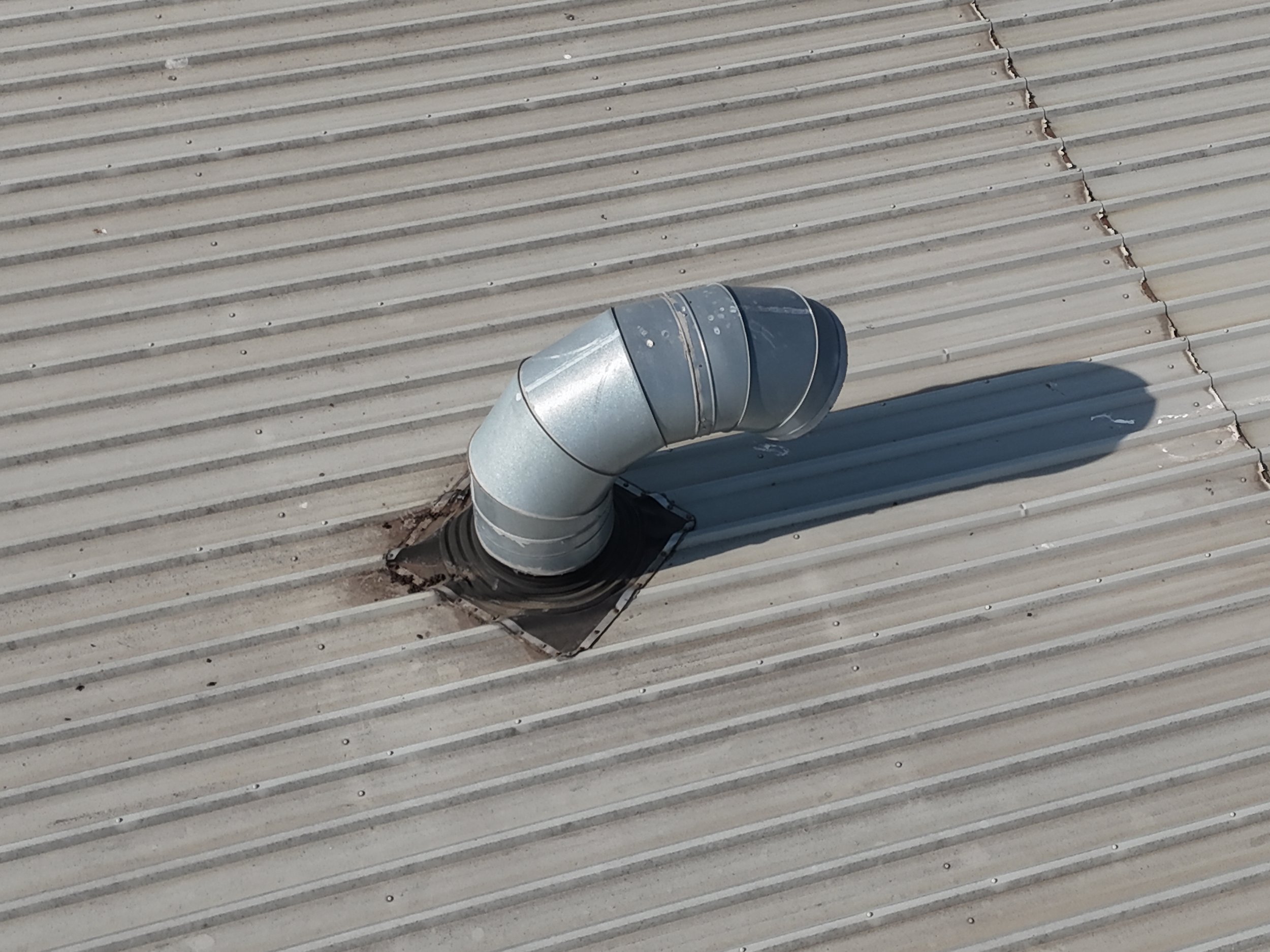
Ageing Pipe Flashings
Several Dektite pipe flashings were approaching the end of their serviceable life.
These flexible weathering components naturally deteriorate through prolonged exposure to ultraviolet light and temperature fluctuations, eventually becoming brittle and susceptible to cracking. Replacement before failure represents a relatively low-cost maintenance item that can prevent significant water ingress around service penetrations.
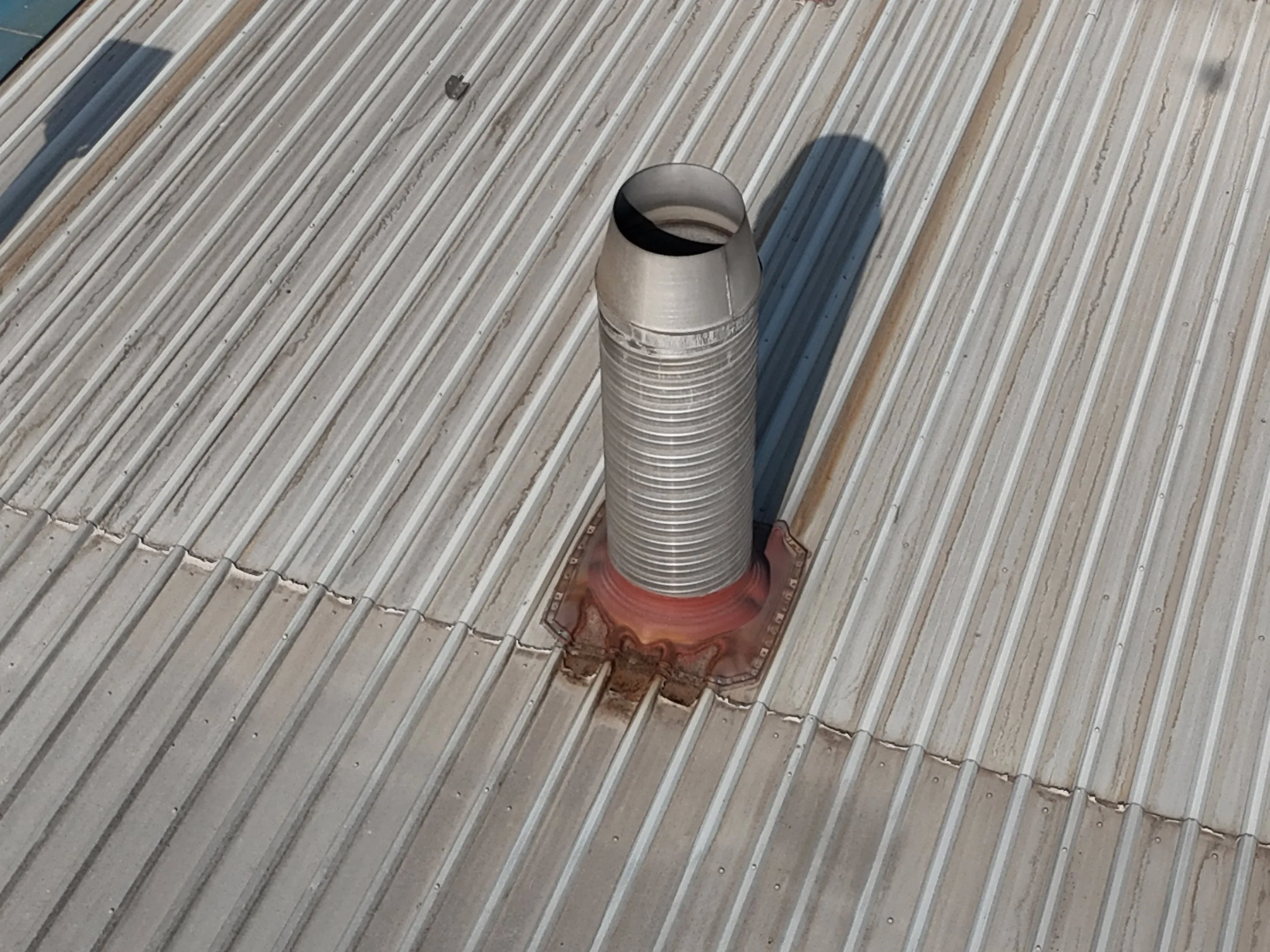
Open Flues
A number of open flues were identified without suitable rain cowls or weather hoods.
Although often overlooked, these should be protected to reduce the risk of rainwater entering flue systems and creating unnecessary internal moisture issues.
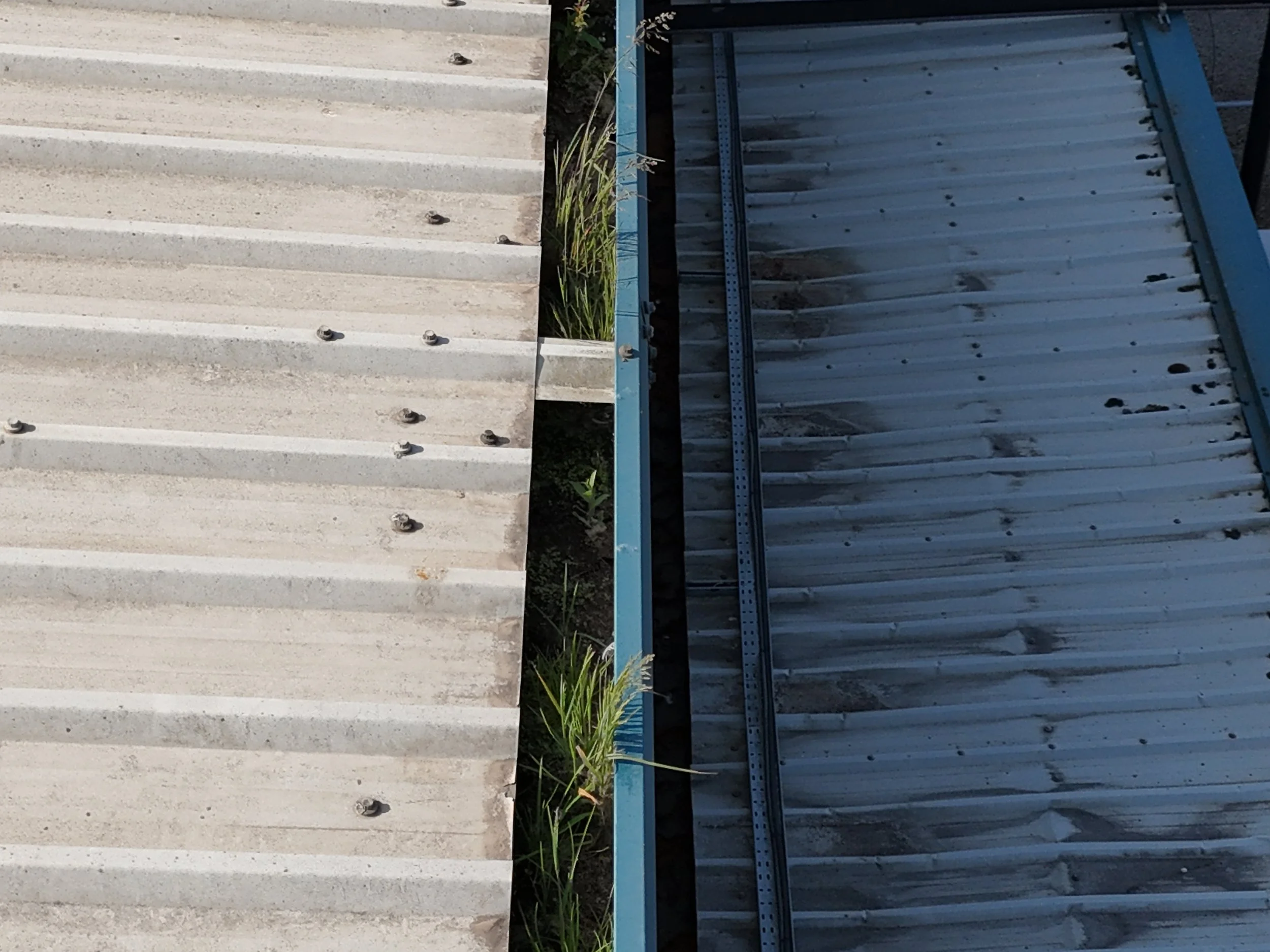
Blocked Gutters
The client had reported isolated internal water ingress down sections of internal wall.
Our inspection identified several gutter sections that were heavily obstructed with debris, restricting rainwater flow and causing gutters to overflow during periods of heavy rainfall. Overflowing gutters remain one of the most common causes of preventable water ingress within commercial buildings.
A full gutter clean was recommended, together with the introduction of an annual inspection and maintenance programme..
Our Recommendations
Following the inspection, Verton Aerial Ltd provided a fully illustrated roof condition report detailing each identified defect, its priority, recommended remedial action and indicative budget costs.
This enables the client to prioritise maintenance based on condition, forecast expenditure and address defects before they develop into more disruptive and expensive repairs.
The Outcome
By identifying defects while they remain manageable, the client is now able to plan maintenance in a controlled and cost-effective manner rather than reacting to failures after they occur.
The inspection confirmed that, whilst the roof remains serviceable, relatively straightforward maintenance works carried out at the appropriate time have the potential to significantly extend its service life and reduce the risk of future disruption to manufacturing operations.
Planning commercial roof maintenance?
Understand the condition of your roof before minor defects become major expenditure.
Independent Roof Inspection Following Disputed Re-Roofing Works
Chapel Allerton, Leeds
Property Type: Victorian Mid-Terrace
Inspection Type: Independent Roof Condition Survey
Roof Covering: Natural Slate
Report Length: 18 Pages / 20 Annotated Images
Inspection Overview
✅ Slate roof covering
✅ Chimney stacks & flaunching
✅ Leadwork & abutments
✅ Valleys & drainage details
✅ Bonding gutter arrangements
✅ Roof ventilation provisions
✅ General workmanship assessment
The Challenge
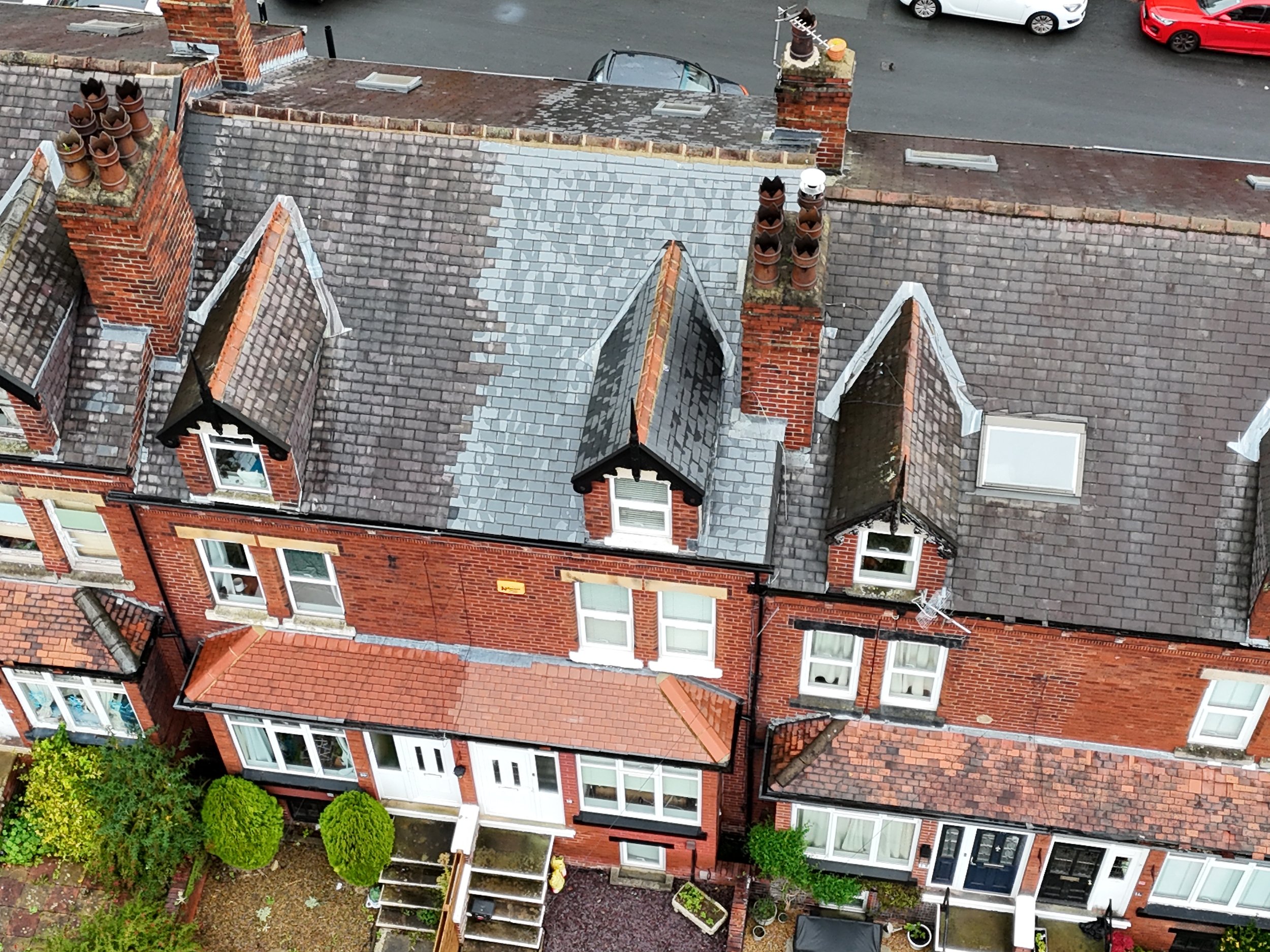
The homeowner had commissioned a full natural slate re-roof approximately one year earlier.
Following completion, water ingress was reported around the chimney stacks. Conflicting opinions from roofing contractors left the client uncertain whether minor repairs or substantial remedial works were required.
Verton Aerial Ltd was instructed to provide an independent assessment of the roof's condition before further action was taken.
🚨 Defective Chimney Leadwork
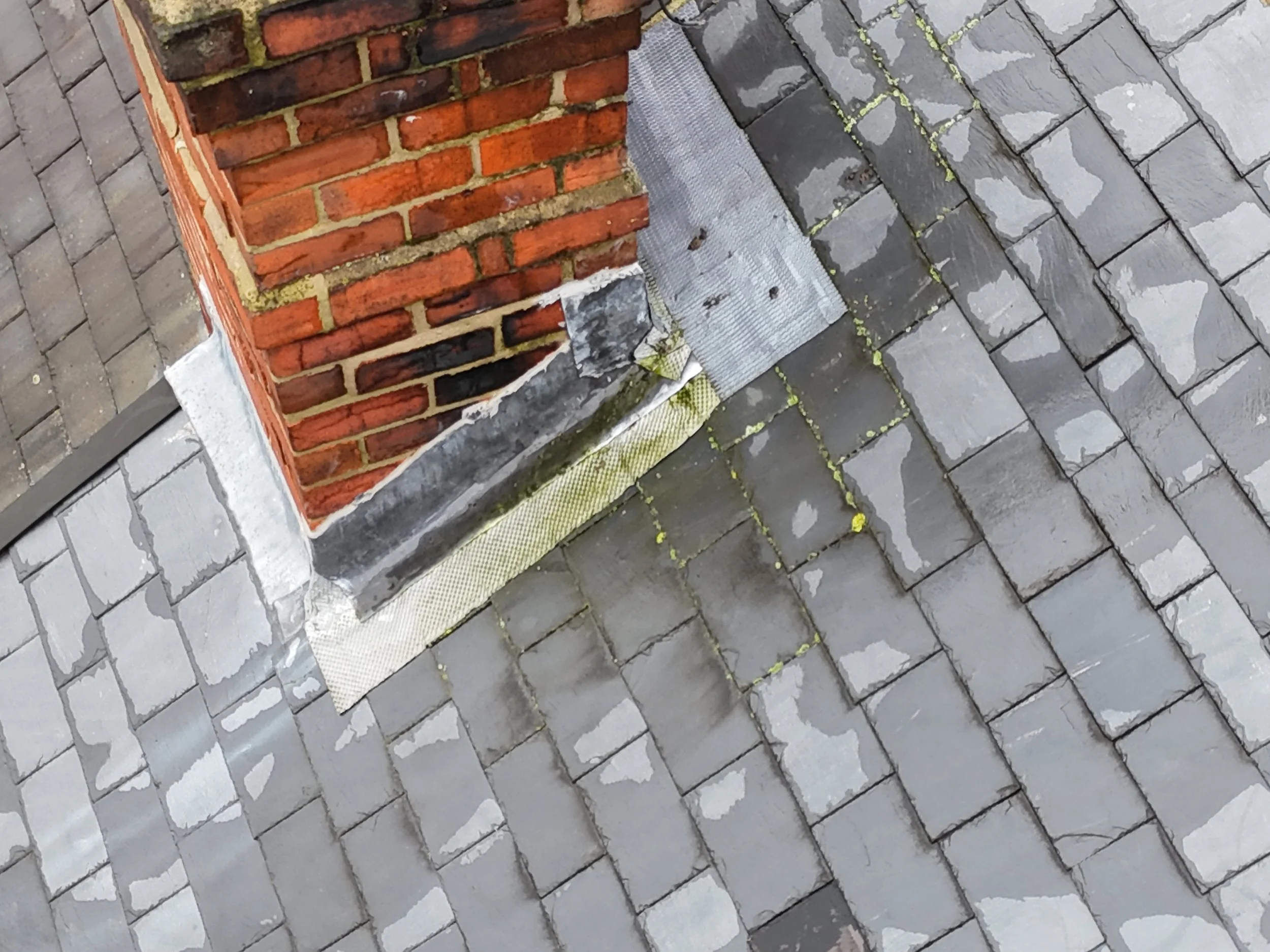
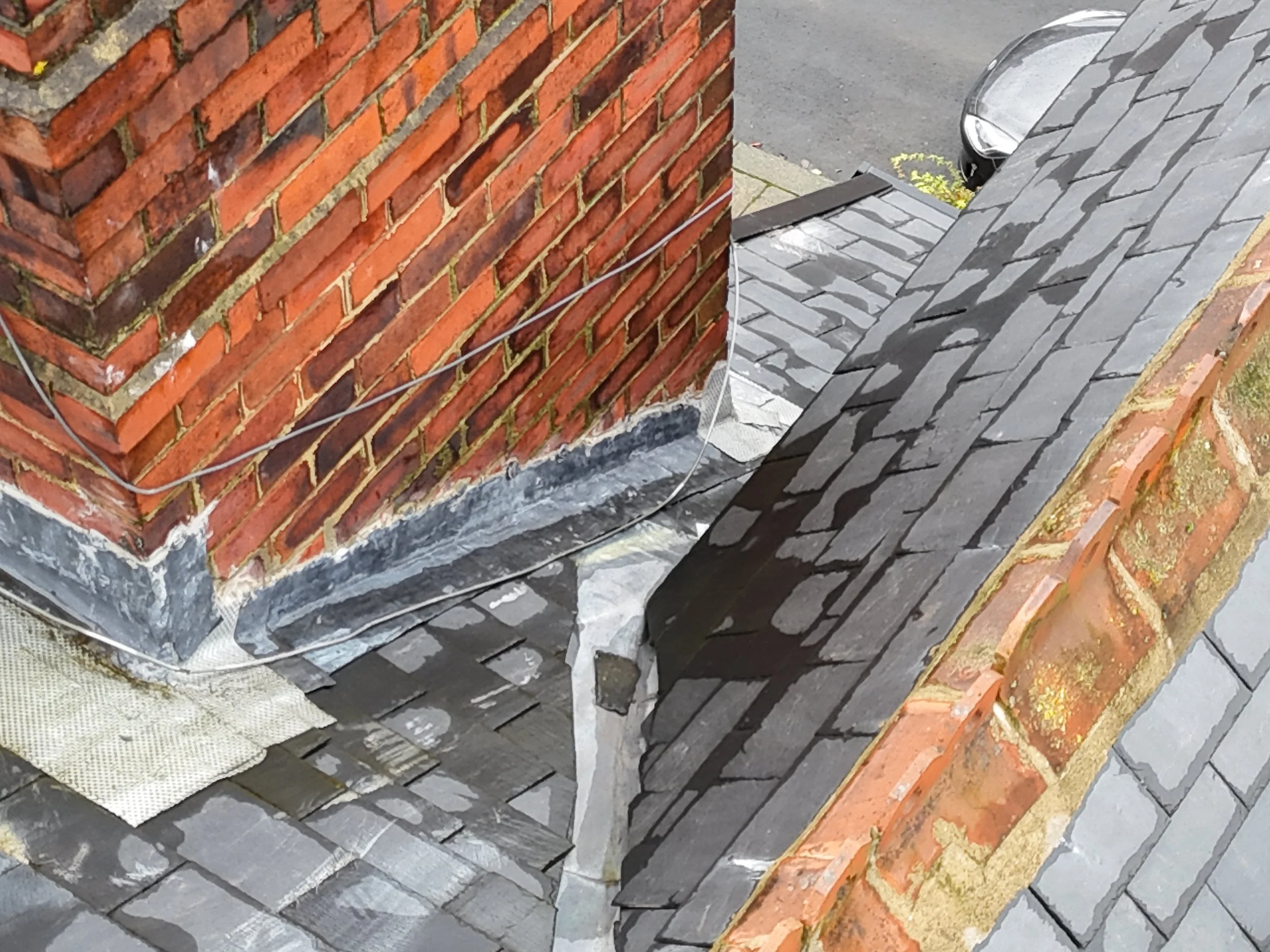
The chimney abutment details were found to be one of the principal causes of water ingress into the property. Despite the client paying for new leadwork as part of the re-roofing project, no evidence of correctly installed lead soakers was identified. Instead, sections of lead substitute material had been used as cover flashings around the stacks, creating vulnerable junctions susceptible to water penetration.
The defects identified corresponded directly with the locations of reported internal leaks and fell significantly below the standard expected of a recently completed natural slate roof installation. Comprehensive replacement of the chimney leadwork would be required to achieve a durable and weatherproof detail.
🏠 Poor Slate Installation & Lack of Ventilation
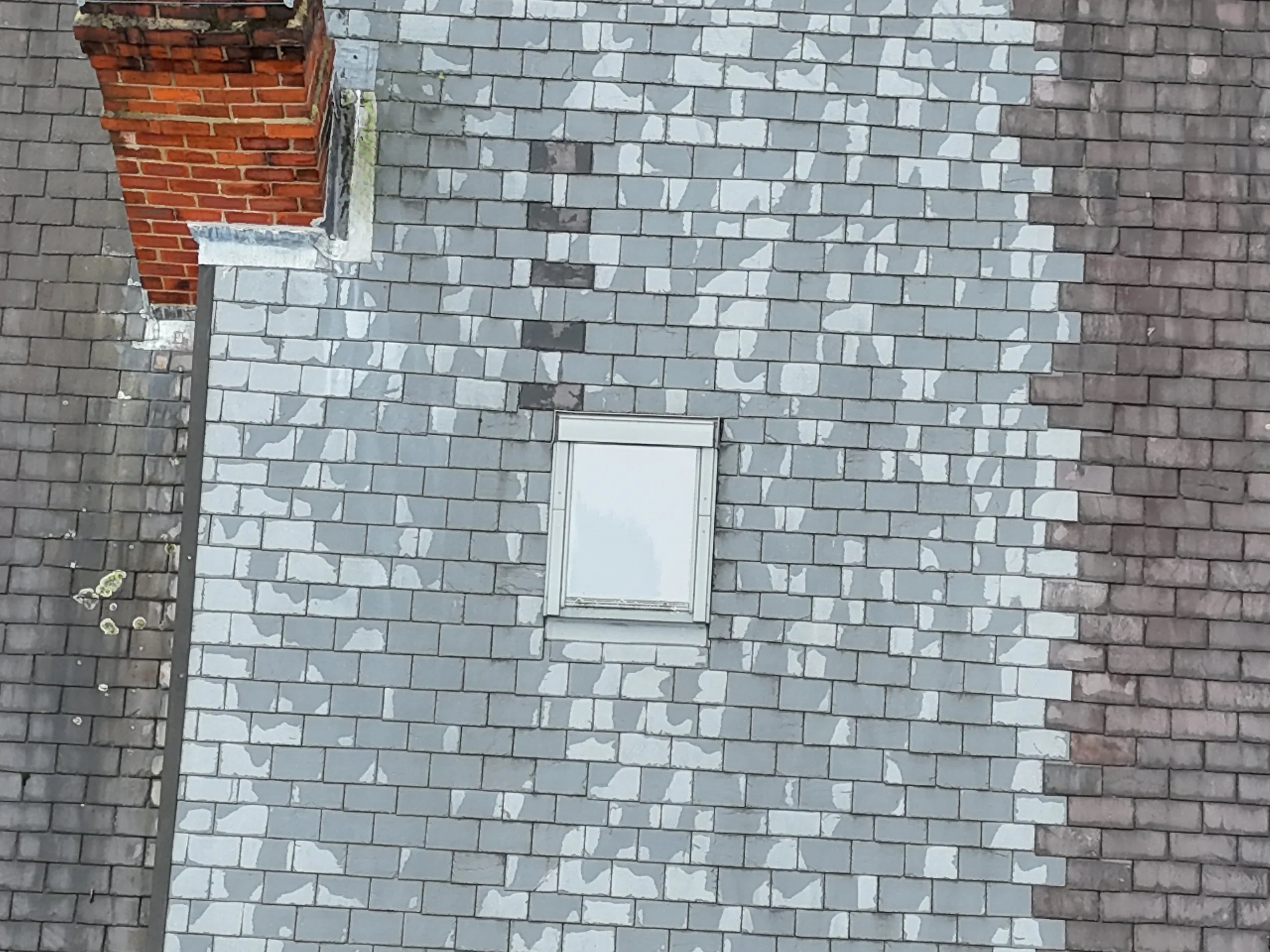
The overall quality of the slate installation was found to be poor, with numerous examples of inconsistent setting out, excessive use of small slate cuts and areas of joint-on-joint slating observed across the roof slopes. Whilst some defects were aesthetic in nature, collectively they indicated a lack of care and attention during installation and resulted in a roof covering that fell below the standard expected standards.
In addition, no provision for roof space ventilation was identified during the inspection. Adequate ventilation is an important component of modern roof construction, helping to control moisture levels within the roof structure and reduce the risk of condensation-related issues. The absence of ventilation, combined with the wider workmanship concerns identified, further reinforced our conclusion that the installation had not been completed in accordance with recognised good roofing practice.
⚠️ Defective Valley Construction
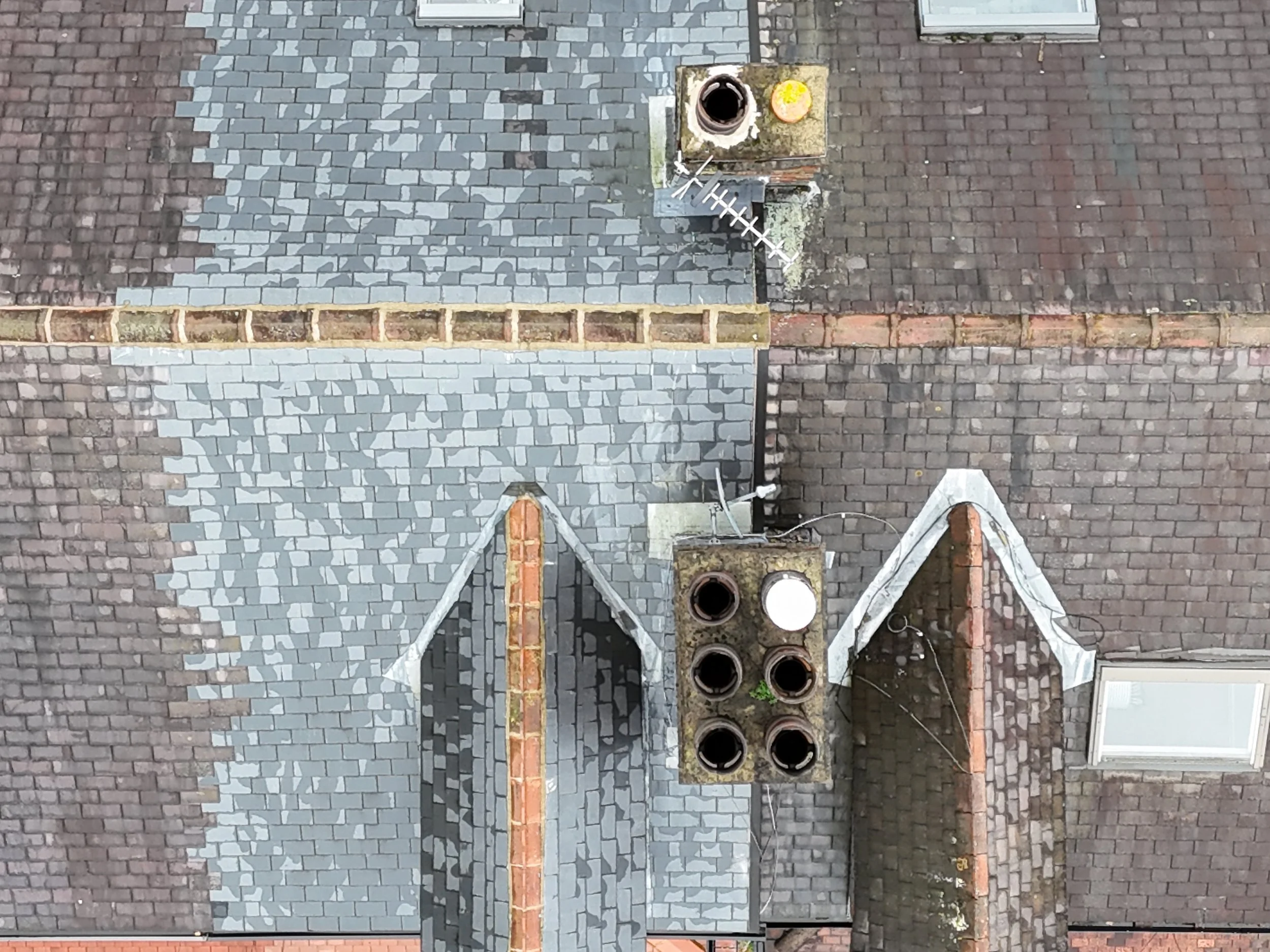
Inspection of the roof valleys identified several workmanship concerns that would be expected to compromise their long-term performance. Valley slates had been poorly cut resulting in an inconsistent finish, while a number of slates had already begun to slip despite the roof being only approximately one year old.
The valleys also displayed signs of premature deterioration and were heavily reliant on workmanship that fell below the standard expected of a newly installed natural slate roof. Given the critical role valleys play in managing large volumes of rainwater, these defects were considered a high priority and likely to worsen if left unaddressed.
🧱 Poor Chimney Maintenance
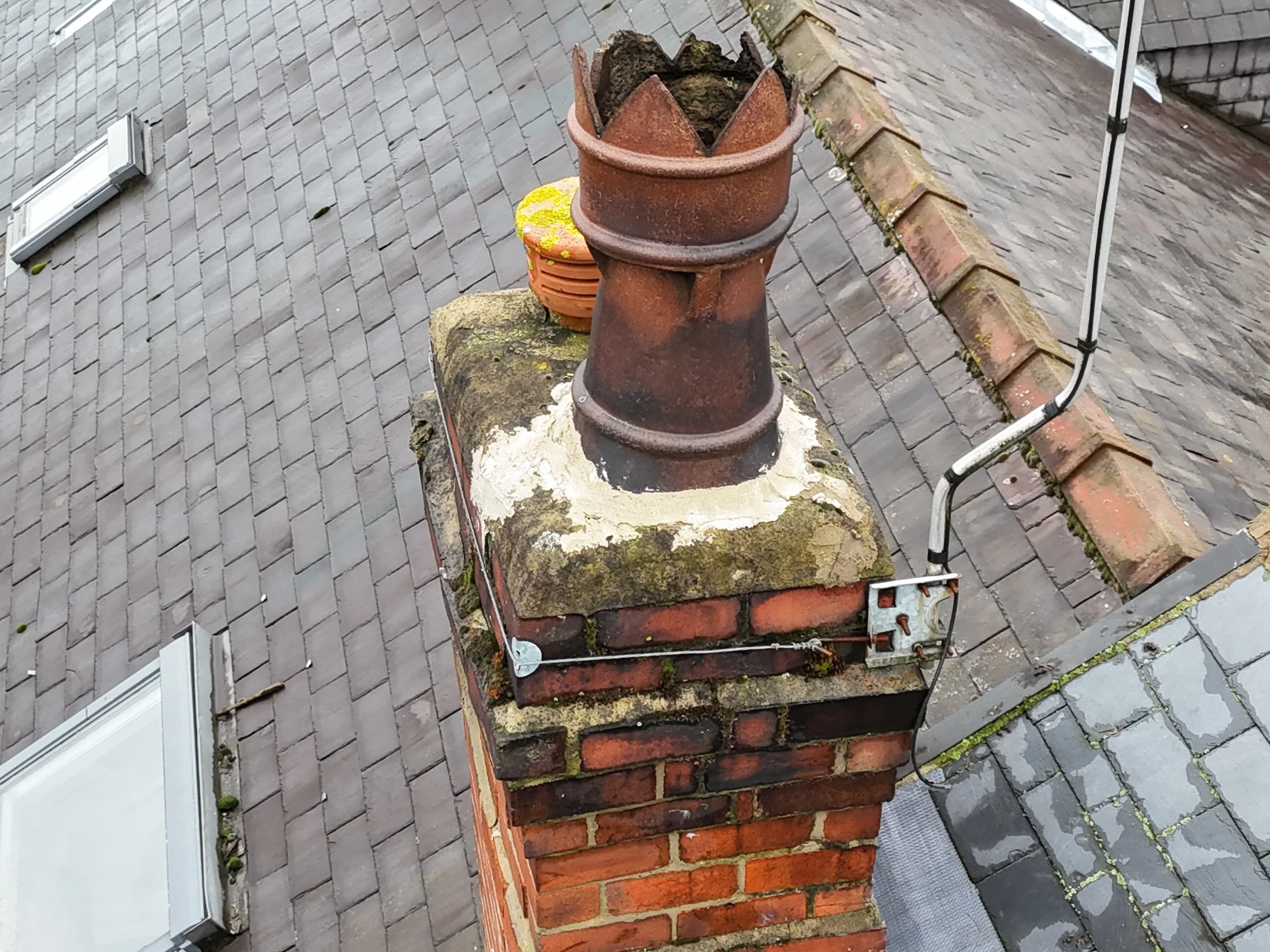
The chimney stacks had been included within the scope of the recent roofing works, however the quality of maintenance carried out was found to be poor. New mortar had been applied directly over deteriorated existing flaunching rather than defective material being properly removed and renewed. Open mortar joints remained visible throughout the brickwork, leaving the stacks vulnerable to ongoing water penetration and accelerated weather-related deterioration.
Chimney pots were left open without suitable cowls installed.
This standard of workmanship is unlikely to provide a durable long-term repair and further remedial works would be required to restore the chimney stacks to a satisfactory condition.
🚨 Missing Bonding Gutter Between Adjoining Properties
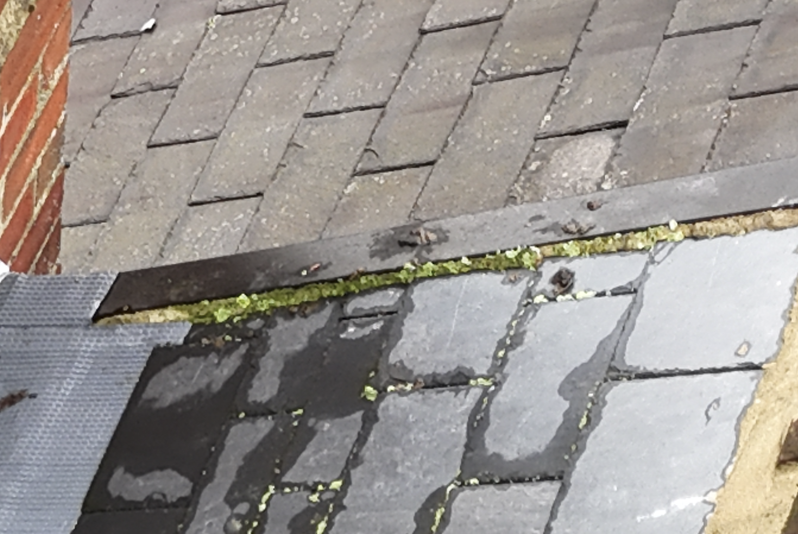
At the junction between the subject property and the neighbouring roof slope, no evidence of a correctly formed bonding gutter was identified. Instead, the roofs appeared to be joined using a mortar fillet with a metal capping detail installed over the junction.
This is not considered an appropriate detail for a natural slate roof and is unlikely to provide a durable long-term weatherproof solution. Bonding gutters are typically required at these interfaces to safely manage rainwater and accommodate differential movement between adjoining properties. The absence of a properly constructed bonding gutter increases the risk of water penetration and future maintenance issues, particularly as the mortar detail deteriorates over time.
Overall Assessment
🔴 Overall Condition: Poor
Whilst the roof covering was only approximately one year old at the time of inspection, widespread workmanship defects were identified across multiple critical roof details. The most significant concerns related to the chimney leadwork, chimney maintenance and valley construction, all of which were considered consistent with the internal water ingress reported by the homeowner.
The quality of workmanship observed fell significantly below that expected of a recently completed natural slate roof installation and substantial remedial works were considered necessary to achieve a satisfactory long-term outcome.
Result
Rather than relying on conflicting contractor opinions, the homeowner received a comprehensive independent assessment supported by detailed aerial imagery.
The report enabled the client to successfully pursue a refund from the original contractor and obtain a clear understanding of the remedial works required.
Why Independent Roof Inspections Are Valuable
When significant roofing works have been completed, defects are not always obvious from ground level.
An independent roof inspection can:
✅ Verify workmanship quality
✅ Identify hidden defects
✅ Investigate leaks and water ingress
✅ Support warranty and dispute claims
✅ Help property owners make informed decisions
Concerned About Roofing Workmanship?
Independent roof inspections throughout Leeds, Yorkshire and the North of England.